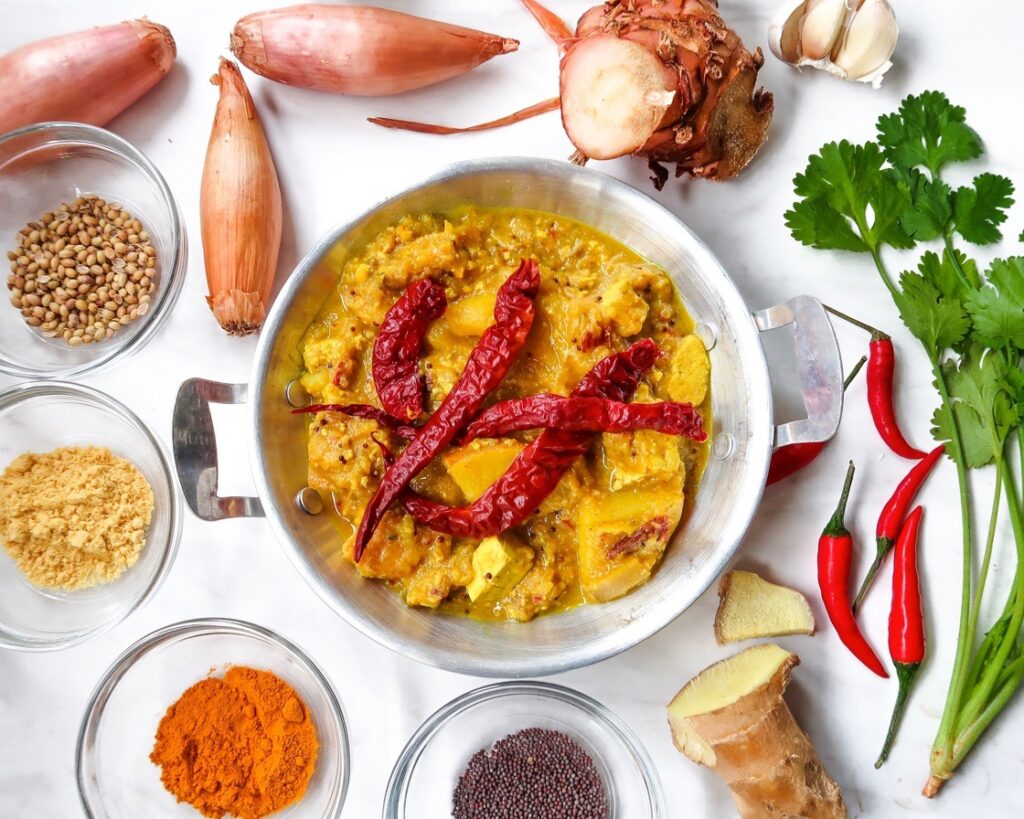
I can just imagine my dear grandmother rolling in her grave at the sheer idea of a VEGAN version of this meat heavy Eurasian dish, Devil Curry! What an abomination, right?
It is sacrilegious to turn this traditional Eurasian turkey-based dish into a tofu-based one. However, with so many of our friends joining the plant-based dietary bandwagon, I just had to create a vegan version of this spicy Eurasian curry so they too can enjoy this heritage dish.
Maybe, we can call this one “Angel’s Curry”, instead. After all, it is practically sinless. It has all the flavourful spices and basic ingredients of the original dish, barring the saturated fats.
DEFINITION OF EURASIAN
Before we start indulging in this scrumptious recipe, let us take a detour for a quick history lesson. What is a Eurasian? Well for South East Asian Eurasians of mixed ancestry, like myself, our history goes way back. In fact, the term “Eurasian” was first coined in mid-nineteenth century British India.
Due to Singapore and Malaysia’s rich colonial past, there were many marriages between Asians, British, Dutch and Portuguese. Thanks to generations of these inter-racial marriages, a creole ethnic group emerged. These Eurasians were called the “Kristang” people, Serani or even Gragok (a derogatory word that means “shrimp”). Eurasians of this mixed ancestry have their own culture, traditions, language, and best of all, food. You can read more about Eurasians in Singapore here.
The term “Eurasian” can also be used to describe those of mixed parentage, where one parent is Asian and the other is Caucasian. However, the upbringing would be influenced by only two ethnic backgrounds and two separate cultures. With Eurasians of mixed ancestry, it is a generally a complicated bag of tricks. As a hybrid of several parts east and other parts west, it is impossible to identify with just one or two races. And so, over the years, our own culture was formed – one that we heavily identify with and that unifies Eurasians from this region.
Eurasian family traditions often centre around Christian celebrations – namely Christmas and Easter – and FOOD. Devil Curry, or Kari Debal was originally made on Boxing Day, with leftovers from the Christmas Feast. In fact, that is what “debal” means in Kristang (a pidgin version of Portuguese, spoken by the older generation of Eurasians) – “leftovers”!

“Debal” means “leftovers” in Kristang! Over the years, the word “debal” became mistaken for “devil” – which works too because this is a fiery hot curry with lots of red chillies.”
DEVIL CURRY EVOKES NOSTALGIA
The recipe for this mustard-based curry, varies from family to family and is extremely personal. As a heritage dish, Eurasians are extremely protective about their Devil Curry as it far extends beyond the ingredients you put into it. It carries with it memories of childhood, tradition and identity.
For some families, it has to be cocktail sausages and chicken drumsticks, for others cabbage, lemongrass and yellow mustard. It all depends on how your grandmother’s mother made it, and what your mother remembered of the recipe, that determines what is passed on to you. The other reason why it is hard to replicate is because the original recipe lacked precise measurements. That is, until I got a kitchen scale and measuring cups to crack the code!
For me, this dish reminds me of my maternal grandparents, in the kitchen, squabbling over how much ketumbah (coriander seeds) to add and how spicy it should be. In my family, there was an unofficial competition to produce the best Devil’s Curry every Yuletide. This would sometimes result in hurt feelings, as all the aunties attempting this recipe would face comparisons and harsh criticism from my grandmother. She would exclaim how one pot lacked vinegar or the other had not enough chilli or garlic!
I wonder what she would say about this vegan version! Well, at least she’d be happy to know, I have perfected our family’s Devil Curry. It is complete with turkey, chicken and bacon bones. However, you will have to get that secret recipe in my cookbook, “Smitten in the Kitchen, 60 Recipes for Love”.
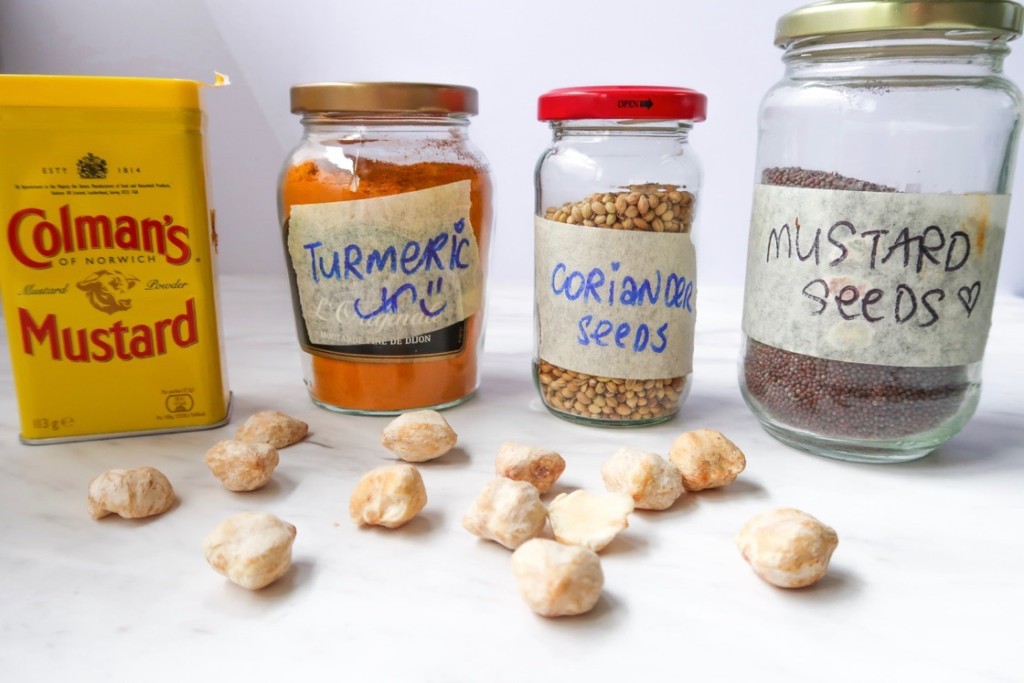
VEGAN EURASIAN DEVIL’S CURRY: THE RECIPE
Now that you have a bit of a background about this precious passed-down recipe and its significance to the Eurasian identity, here is my meatless version of this Eurasian classic. Feel free to adjust the heat level, as the amount of chilli in this is very mild. Also, you may add your favourite meat analogue to the mix, like seitan, vegan sausages or “meat” strips.
Enjoy!
Discover more recipes here.